Posted on

Custom Stickers Versus Decals: What Is the Difference?

Custom Stickers Versus Decals: What Is the Difference?

If you have searched for a custom logo sticker, a window decal, or vinyl lettering, you have probably noticed that print shops do not always use the same words in the same way. One company may call a printed vinyl graphic a sticker. Another may call nearly the same product a decal.

That can make ordering confusing, especially when two products look similar on a screen but arrive with different layers and require different installation methods.

There is no universal naming rule followed by every printer. In everyday shopping, sticker and decal often overlap. The most useful way to tell them apart is to look at how the product is constructed, how it is applied, and what remains on the surface after application.

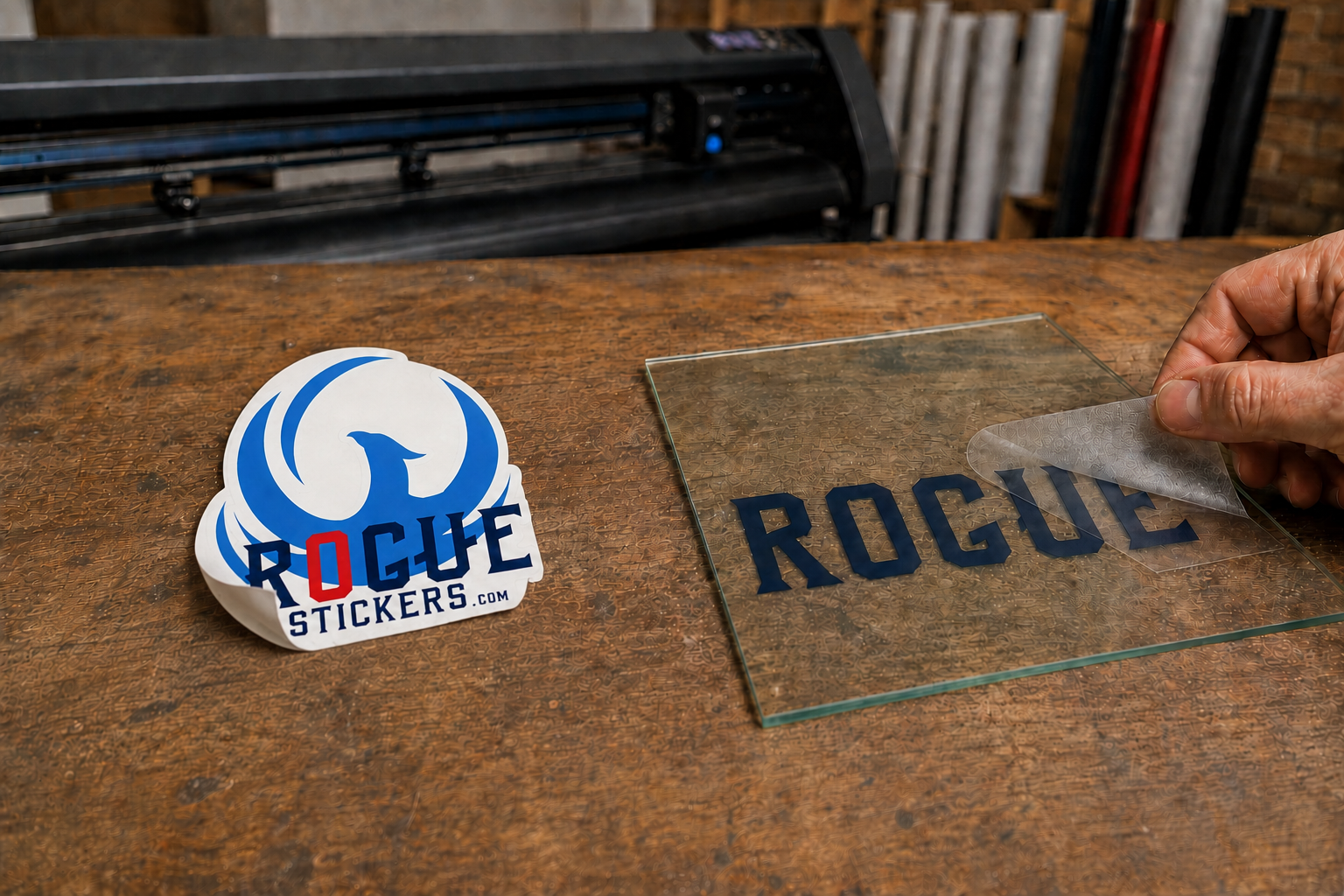
For this guide, a sticker means a single printed piece that you peel from its backing and apply directly. A transfer decal means a cut or printed design held together by application tape, which is removed after the design bonds to the surface.

What Is a Custom Sticker?

A custom sticker is usually one piece of adhesive material with artwork printed on its face. You remove the backing, position the sticker, and press the entire piece onto the surface.

The finished sticker may be a circle, square, rectangle, oval, or a custom shape. A custom die cut vinyl sticker follows the outside contour of the artwork, but it still applies as one complete piece.

This format works well when you want something that is easy to hand out, sell, place inside an order, or apply without extra steps. Common uses include:

  1. Water bottles and coolers

  2. Laptops and notebooks

  3. Product packaging

  4. Event giveaways

  5. Artist merchandise

  6. Branded inserts

  7. Toolboxes and equipment

A sticker can have a solid white base, a colored background, or a transparent base. The important point is that the printed material remains one connected piece after it is applied.

What Is a Transfer Decal?

A transfer decal is designed so separate letters, shapes, or parts of a graphic can be installed together in the correct position. It normally arrives in layers.

The liner protects the adhesive before installation. The actual vinyl or printed graphic forms the design. Application tape sits over the front and holds every part in alignment while the decal is placed.

After the design bonds to the surface, the application tape is peeled away. Only the intended lettering or graphic remains. There is no surrounding rectangle of sticker material.

This is why transfer decals are often chosen for:

  1. Store hours on glass doors

  2. Business names on windows

  3. Vehicle lettering

  4. Equipment identification

  5. Simple logos on smooth surfaces

  6. Directional signs

  7. Wall lettering made for a suitable wall surface

Rogue Stickers offers both single color die cut transfers and full color die cut transfers. The right version depends on the artwork and the intended appearance.

Are All Decals Transfer Decals?

No. This is where terminology becomes less precise.

Many sellers use decal as a broad word for a durable adhesive graphic, including printed vinyl pieces that apply exactly like stickers. You may see bumper decals, floor decals, wall decals, and window decals that do not use application tape at all.

The product name alone may not tell you what will arrive. Read the description and look for these details:

  1. Does the graphic apply as one complete printed piece?

  2. Does it include application tape?

  3. Will the background material remain visible?

  4. Are individual letters or design elements transferred to the surface?

  5. Is it meant for the exact surface where you plan to use it?

Those answers matter more than whether the product page says sticker or decal.

What Is the Main Visual Difference?

A standard sticker keeps its base material around and between the printed elements. A transfer decal can leave only the design itself on the surface.

Imagine a business name written in individual letters. As a white vinyl sticker, the letters could be printed inside one white rectangle or one custom shaped piece. As a cut vinyl transfer decal, each letter can adhere directly to the window while preserving the spacing of the original design. After the application tape is removed, the glass shows through every open area.

A clear vinyl sticker offers another option. Its transparent material can create a subtle appearance, but clear vinyl still remains between the printed areas. Depending on the artwork, surface color, ink, and lighting, that material may still be visible.

Which One Is Easier to Apply?

For most small projects, a regular sticker is easier. You peel it, place it, and press it down. Careful alignment still matters, but there are fewer layers to manage.

A transfer decal takes more patience. Every element must bond to the application surface before the top tape is removed. Large designs and fine lettering require especially careful pressure and alignment.

Application tape is not decorative packaging. It temporarily keeps the graphic together and helps move it to the final surface. Once the decal has been pressed firmly into place, the tape is removed and discarded.

Whatever format you choose, begin with a clean, dry surface. Dirt, oil, wax, dust, and cleaner residue can interfere with adhesion. Always follow the instructions supplied with the specific product because suitable cleaners, temperatures, and methods can vary by material and surface.

Should You Choose a Sticker or a Decal for a Vehicle?

Either format may be appropriate, but the goal determines the better choice.

A custom sticker can work well for a compact logo, bumper graphic, or promotional design that should apply in one piece. A transfer decal is often the cleaner option for individual lettering, a website address, a unit number, or a logo that should appear without a surrounding background.

Before applying anything to a vehicle, confirm that the material is intended for automotive use and that the paint is sound. Fresh paint, repaired paint, coatings, curves, trim, sensors, and textured plastic can change what is suitable. A large or complex vehicle graphic may be better handled by an experienced installer.

Texas heat and sun also make product selection important, but no responsible printer can promise one universal service life for every vehicle. Exposure, material, installation, maintenance, parking conditions, and surface condition all affect performance.

What Works Best for Storefront Windows?

Transfer decals are a strong choice when you want hours, lettering, or a logo to look as if it was placed directly on the glass. They preserve open space around the design and can produce a clean sign shop appearance.

Printed stickers are useful when the artwork needs a solid background, detailed illustration, photograph, or self contained shape. Clear stickers can work when you want the glass to remain visible, but artwork colors may interact with what is behind the window.

Think about viewing direction before ordering. A graphic applied outside the glass and read from outside is different from one applied inside and read through the glass. Window tint, reflections, interior lighting, and white ink can also change visibility. Tell the printer where the graphic will be installed and from which side it should be read.

Which Format Is Better for Packaging and Giveaways?

Custom stickers are usually the practical choice. They are easy to distribute, simple for customers to use, and familiar at merch tables, markets, festivals, and retail counters.

For an Austin restaurant, brewery, artist, or small business, a die cut sticker can carry a complete logo or illustration in one portable piece. It can be included with an order without asking the customer to follow a transfer process.

Transfer decals make more sense when the intended result is permanent looking lettering or a borderless graphic on a known surface. They are less convenient as a casual giveaway because the recipient needs to understand the layers and application process.

Can a Detailed Design Become a Transfer Decal?

Sometimes, but not every design is a good candidate.

Single color cut vinyl works best with clean shapes, readable lettering, and elements large enough to cut, weed, and transfer reliably. Tiny gaps, delicate lines, distressed textures, and intricate details may need to be simplified.

Artwork with photographs, gradients, shadows, or many colors may require a printed full color transfer product or a standard printed sticker. The best choice depends on the actual artwork, final size, and production method.

Do not assume that removing a background from an image automatically makes it suitable for a transfer decal. The remaining elements still need to survive cutting, handling, and installation.

What Should You Ask Before Ordering?

If a product description is unclear, ask the printer these questions:

  1. Will this apply as one piece or as separate transferred elements?

  2. Does it arrive with application tape?

  3. What material will remain visible after installation?

  4. Is it appropriate for my exact surface and location?

  5. Should it be installed inside or outside the glass?

  6. Is my artwork detailed enough to require printing rather than cut vinyl?

  7. What file type and final dimensions should I submit?

  8. Are there special installation or care instructions?

A clear answer to those questions will prevent most ordering surprises.

The Simple Way to Choose

Choose a custom sticker when you want a complete printed piece that is easy to peel, apply, share, sell, or add to packaging.

Choose a transfer decal when you want letters or graphic elements to remain on the surface without a visible background connecting them.

If the terminology on a product page still feels vague, focus on construction and application. Ask what layers arrive, what remains after installation, and whether the material suits the intended surface.

Sticker versus decal is not merely a vocabulary question. It is a decision about appearance, installation, artwork, and use. Once those four details are clear, choosing the right product becomes much easier.

Compare sticker styles and materials and read our surface preparation guide. For questions about a specific application, contact Rogue Stickers before ordering.
Posted on

5 Ways Custom Packaging Stickers Help Turn First Orders Into Repeat Customers

Make Your Brand Recognizable Before the Box Is Opened

Getting a customer to place an order is difficult. Getting that customer to remember your business after the package arrives can be even harder.

For an online business, packaging is one of the few physical interactions a customer has with your brand. The box, mailer, tissue paper, product label, and small details inside the order all influence how the purchase feels.

Custom packaging stickers give small businesses a practical way to make that experience feel more intentional without investing in completely custom boxes or expensive packaging.

A sticker alone cannot guarantee customer loyalty or double your repeat purchase rate. What it can do is help customers recognize your brand, feel appreciated, find their way back to your store, and remember the experience when they are ready to order again.

Here are five ways to put custom stickers to work in your packaging.

1. Make Your Brand Recognizable Before the Box Is Opened

A plain shipping box does its job, but it does not say much about the business behind the order.

Adding a custom logo sticker to the outside of a box, mailer, bag, or envelope immediately connects the delivery to your brand. That recognition matters, especially when a customer has several packages arriving during the same week.

Your logo sticker does not have to be complicated. In many cases, a clean logo, recognizable brand color, and simple sticker shape will look more professional than a design crowded with text.

Good places for a custom logo sticker include:

  • The center of a shipping box
  • The flap of a mailer
  • A paper shopping bag
  • Tissue paper inside the package
  • A product box or protective sleeve
  • The front of a thank you card

The goal is consistency. The colors and style should match the website, product, and social media presence the customer already recognizes.

Shopify describes packaging as an opportunity to reinforce a brand and make customers feel valued during the unboxing experience. It also recommends beginning with one clear brand element on the package rather than making the presentation unnecessarily complicated. Shopify

2. Use Thank You Stickers to Make the Order Feel Personal

Customers know that an online order is part of a business transaction. A sincere thank you can still make that transaction feel more human.

Thank you stickers are especially useful for Etsy sellers, Shopify stores, local retailers, bakeries, boutiques, artists, subscription businesses, and other companies that pack orders by hand.

Instead of using a generic message, write something that sounds like your business.

Consider wording such as:

  • Thank you for supporting our Austin small business
  • Packed with care just for you
  • You made our day
  • Thanks for shopping small
  • We are glad you found us
  • Made in Texas and packed with gratitude

A thank you sticker can seal tissue paper, close an envelope, hold a note in place, or appear directly on the product packaging.

The message should be warm, brief, and easy to read. It should not feel like another advertisement. Appreciation works best when it sounds genuine.

3. Give Customers a Simple Reason to Order Again

Good packaging celebrates the current purchase. Smart packaging also creates a path toward the next one.

A custom sticker can include a short return offer, reorder reminder, or customer reward. For example:

  • Save 10 percent on your next order
  • Scan to reorder your favorite
  • Come back for the next collection
  • Share your order and tag us
  • Join our rewards list
  • Refer a friend and receive a thank you gift

Keep the offer simple. If customers must enter a long code, visit several pages, or read fine print, fewer people will act on it.

The promotion should also fit your margins. A future discount is not the only option. Early access, a free sample, a limited product, or entry into a customer giveaway may be more valuable to your audience.

The sticker can go on a thank you card or packaging insert so the customer can keep it after discarding the shipping box.

4. Add a Custom QR Code Sticker With a Clear Purpose

A QR code can connect physical packaging to an online action in seconds. The mistake many businesses make is adding a code without explaining why anyone should scan it.

Do not print only a QR code. Pair it with a clear benefit.

Examples include:

  • Scan for care instructions
  • Scan to reorder
  • Scan for your next purchase offer
  • Watch how your product was made
  • Join our loyalty program
  • Leave a review
  • Follow our newest product releases

Always test the code at the actual printed size before approving production. Scan it with more than one phone, check it under normal indoor lighting, and confirm that it opens the correct mobile friendly page.

You can also add tracking information to the destination URL. Google Analytics supports UTM campaign parameters that help identify which campaign or marketing material generated website traffic. Google Analytics Help

A tracked packaging link might identify the source as packaging, the medium as QR code, and the campaign as customer reorder. This gives you a better way to measure whether customers are using the sticker.

5. Choose the Right Sticker Format for the Job

One common question is whether a business should order roll labels or die cut stickers.

Roll labels are generally designed for fast, repeated application. They can be useful when the same label must be placed on hundreds or thousands of bottles, jars, pouches, or boxes.

Die cut stickers are individually cut around the shape of the artwork. They are a strong choice when presentation, custom shape, and versatility matter. They can be applied to packaging, included as a free sticker, handed out at events, or used as branded merchandise.

Here is a simple way to compare them:

Packaging need Format to consider
Repeated product labeling at high volume Roll labels
Custom logo shape Die cut stickers
A sticker customers can keep Die cut stickers
Sealing tissue paper or envelopes Circle, square, or oval stickers
Branding clear bottles or product windows Clear stickers
Several designs packaged together Sticker sheets
Detailed artwork that should be easy to peel Kiss cut stickers

The correct choice depends on the surface, application method, quantity, artwork, and whether the sticker is part of the packaging or part of the customer experience.

Three Packaging Concepts to Try

These examples are packaging concepts rather than customer case studies. They show how different businesses could combine stickers without overcomplicating the package.

The Shopify Clothing Brand

Place a custom logo sticker on the outside mailer. Seal the tissue paper with a smaller thank you sticker. Add a QR code insert that takes the customer to garment care instructions and a matching collection.

The Etsy Candle Seller

Use a clear logo sticker on the candle vessel, a branded seal on the product box, and a thank you sticker on a handwritten note. Include a QR code leading to scent care instructions and the reorder page.

The Austin Food Business

Add a branded sticker to the carryout bag or product package. Use a second sticker with a simple message about the local business. A tracked QR code can direct customers to current menus, ordering information, or seasonal products.

How to Measure Whether Your Packaging Is Working

Do not assume that new packaging is successful simply because it looks better.

Choose a starting date and monitor:

  • Repeat purchase rate
  • QR code visits
  • Reorders using the packaging offer
  • Customer reviews mentioning packaging
  • Social posts featuring the unboxing
  • Packaging related customer service issues
  • Product damage and return rates

Test one meaningful change at a time. This makes it easier to understand which sticker, message, offer, or placement influenced the result.

Start With One Memorable Detail

A small business does not need luxury boxes, several layers of inserts, or expensive filler to create a thoughtful package.

Start with one useful improvement. Add a clean logo sticker. Seal the tissue paper with a genuine thank you. Give the customer an easy way to reorder. Then measure what happens.

Rogue Stickers prints custom business and packaging stickers in Austin, Texas, with an online proof before production. Whether you need custom logo stickers, die cut stickers, clear stickers, sticker sheets, or classic label shapes, the goal is the same: make your packaging look intentional and help customers remember the business behind the order.

Ready to improve your next shipment? Explore the custom sticker options at RogueStickers.com or contact the team for help choosing the right sticker for your packaging.

Written by Robert Mendieta
Owner, Rogue Stickers
Austin, Texas

Compare custom logo stickers and multi-design sticker sheets. For questions about a specific application, contact Rogue Stickers before ordering.

Posted on

The Unboxing Anatomy: How E-commerce Brands Use Custom Sticker Sheets to Drive Customer Retention

The Unboxing Anatomy: How E-commerce Brands Use Custom Sticker Sheets to Drive Customer Retention

The Unboxing Anatomy: How E-commerce Brands Use Custom Sticker Sheets to Drive Customer Retention

If you run a direct to consumer brand, you already know the unboxing moment is not just packaging. It is marketing real estate that most brands waste on tissue paper and a thank you card. The founders who understand this are quietly turning a two dollar insert into a repeat customer machine, and the tool doing the heavy lifting is often something as simple as a custom sticker sheet.

This is not a post about how to order stickers. It is a post about how to use them to make money.

Why Sticker Sheets Belong in Your Packaging Strategy, Not Your Swag Closet

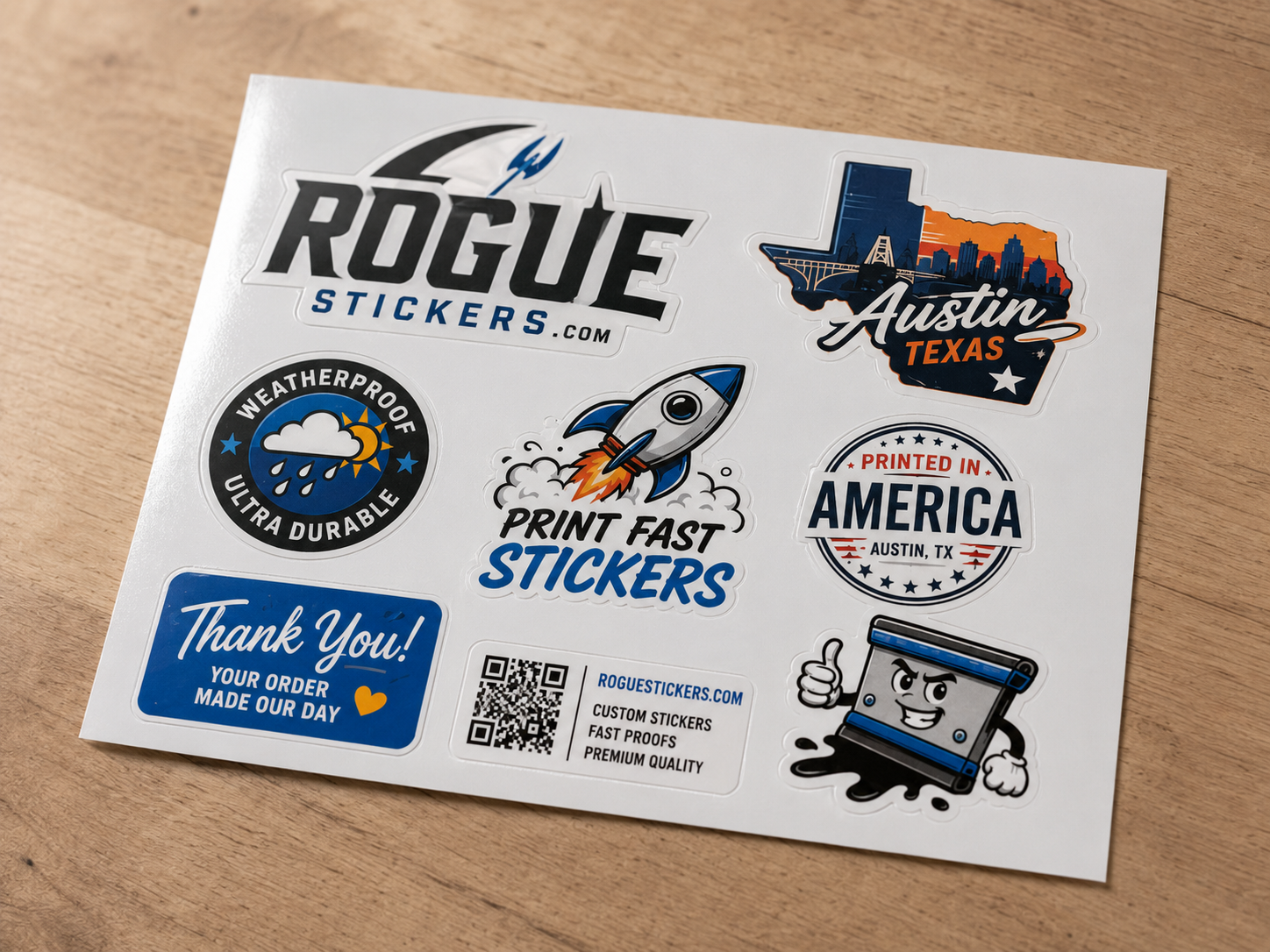
Most brands treat stickers as an afterthought, a single die-cut logo tossed in as a courtesy. A sticker sheet is a different product entirely. Instead of one sticker, you are handing the customer a curated collection, usually five to twelve designs on a single printed sheet, built around a theme, a product drop, or a brand world.

The shift from “single sticker” to “sheet” changes the psychology of the unboxing completely. A single sticker gets used or it does not. A sheet invites the customer to make choices: which one goes on the laptop, which one goes on the water bottle, which one gets saved. That decision-making moment is where retention marketing actually happens, because you have turned a passive customer into someone actively curating your brand.

The Psychology of Why People Stick and Collect

I am not a behavioral psychologist, and I want to be upfront that I have not seen a peer-reviewed study specifically measuring sticker sheet collection behavior, so I will not pretend one exists. What I can speak to is what I have observed first-hand, packing thousands of these sheets for e-commerce clients and watching how customers respond in reviews, unboxing videos, and social tags.

A few patterns show up consistently:

Completionism drives engagement. A sheet with multiple designs taps into the same instinct that makes people finish a sticker album or a trading card set. Customers want to use or place every sticker on the sheet, not just one.

High-visibility placement turns customers into unpaid media. Laptops, water bottles, car bumpers, and phone cases are surfaces other people see constantly. When a customer places your sticker there, they are not just keeping your brand around. They are broadcasting it to coworkers, classmates, and strangers in a coffee shop line, essentially becoming an unpaid member of your street team.

Tangibility builds a stronger memory anchor than digital touchpoints. A sticker sheet sits in a drawer or a laptop lid for months or years. A promotional email gets deleted in seconds. If you are trying to build brand recall between purchases, a physical object beats a digital impression, at least in terms of longevity, even if I cannot cite an exact retention percentage difference between the two.

If you want to dig into the research side of consumer collecting behavior more formally, I would recommend searching for academic work on “collecting behavior consumer psychology” through a source like Google Scholar rather than taking a single blog’s word for it, mine included.

Why This Is a Higher Margin Play Than You Think

Free packaging inserts sound like a cost center until you look at the math. A well-designed sticker sheet costs a fraction of what most brands spend on other retention tactics like discount codes, loyalty programs, or paid retargeting ads. You are not discounting your product or paying a platform fee. You are printing a physical asset once and letting it generate brand exposure passively for as long as the sticker survives.

For higher-ticket product lines especially, a sticker sheet insert reinforces the premium feel of the purchase rather than undercutting it. Slipping a coupon into a $200 order can feel like you are apologizing for the price. Slipping in a beautifully designed, on-brand sticker sheet feels like a gift, not a discount.

What Makes a Sticker Sheet Insert Actually Work

Not every sheet performs the same way. From what I have seen packing these for clients, the sheets that actually get used and displayed share a few traits:

  • They match the drop, not just the logo. A generic logo sticker gets ignored. A sheet designed around a specific collection, season, or product launch feels collectible and limited.
  • They include a mix of icon and text-based designs. Customers want variety. A sheet that is all wordmarks feels flat compared to one that mixes illustration, iconography, and typography.
  • The material holds up outdoors and on metal. If you want your sticker on a water bottle or a car bumper, it needs to survive weather, condensation, and dishwasher-adjacent abuse. A cheap laminate peels within weeks and undoes the entire strategy.
  • They are sized for real surfaces. Laptop lids, Hydro Flasks, and skateboard decks all have different usable space. Sheets designed with those surfaces in mind get used more than a single oversized sticker that does not fit anywhere.

If you are sourcing these for your own packaging, our team at RogueStickers builds custom sticker sheets specifically for e-commerce packaging inserts, with weatherproof vinyl options that are meant to survive the water bottle and laptop lifecycle, not just sit in a junk drawer. You can see the specs on our custom sticker sheets page if you want to compare stock, sizing, and finish options before your next print run.

A First-Hand Look at the Packaging Layer

Below is an example of the kind of packaging setup we help DTC brands build: a custom multi-design sticker sheet resting inside a branded shipping box, positioned so it is the first thing a customer sees when they open the package. The goal is always the same, make the sticker sheet feel like part of the product experience, not an afterthought thrown in at the last second before sealing the box.

(Insert real, unedited photos here of your own printed sticker sheets inside your packaging. Photos you have taken yourself of your own manufacturing work are one of the strongest trust signals you can put on this page, both for readers and for search engines evaluating first-hand expertise.)

How to Brief Your Sticker Sheet Like a Marketer, Not a Print Buyer

When you are ready to design your own insert, treat the brief the way you would treat an ad creative brief, not a print order.

  1. Define the placement goal first. Are you designing for laptops, water bottles, or car windows? The surface should inform the size and shape of each design on the sheet.
  2. Build in a “hero” design. Give the sheet one standout piece, usually the largest or most detailed, that customers are most likely to actually use. The rest of the sheet can be smaller, simpler supporting designs.
  3. Leave white space between designs. Overcrowded sheets are harder to cut apart cleanly, and customers are less likely to bother separating a cluttered sheet.
  4. Match the packaging, not just the product. The sheet should visually connect to your box, your mailer, or your tissue paper, so the entire unboxing feels designed as one experience rather than assembled from mismatched vendors.

The Bottom Line

A custom sticker sheet is one of the lowest cost, highest visibility retention tools available to an e-commerce brand, and it works because it turns a single purchase into ongoing, physical brand exposure. It will not replace a full retention strategy on its own, and I would not claim it outperforms email or loyalty programs across the board without brand-specific data to back that up. But as a packaging insert that customers actually want to keep, use, and show off, it is hard to beat the economics.

If you want to build a sticker sheet insert for your next product drop, our team at RogueStickers works directly with e-commerce and DTC brands on custom packaging inserts, from initial design through weatherproof printing. Reach out through our site to start a proof for your next order.


A quick honesty note for transparency: the psychology points in this article reflect first-hand observations from packing and shipping these products, not formal clinical research, and I have flagged that distinction throughout. If you are citing consumer behavior claims in your own marketing materials, I would recommend verifying any specific statistic against a primary source before publishing it as fact.

Compare custom logo stickers and multi-design sticker sheets. For questions about a specific application, contact Rogue Stickers before ordering.